 |
PIP 5.9.0
Platform-Independent Primitives
|
Loading...
Searching...
No Matches
|
PIP 5.9.0
Platform-Independent Primitives
|
Class for managing external processes. More...
#include <piprocess.h>
Public Member Functions | |
| PIProcess () | |
| Construct empty PIProcess. | |
| int | exitCode () const |
| Returns last attached execution exit code. | |
| int | pID () const |
| Returns current attached execution process ID. | |
| PIString | workingDirectory () const |
| Returns current attached execution working directory or empty string if it wasn`t set. | |
| void | setWorkingDirectory (const PIString &path) |
| Set attached execution working directory. | |
| void | resetWorkingDirectory () |
| Rseet attached execution working directory, application working dir will be used. | |
| PIByteArray | readOutput () |
| Returns all attached execution output stream. | |
| PIByteArray | readError () |
| Returns all attached execution error stream. | |
| bool | writeInput (const PIByteArray &data) |
| Write data to attached execution input stream. | |
| void | closeInput () |
| Close attached execution input stream and send EOF. | |
| void | enableWriteStdIn (bool on=true) |
| Enable or disable writing to process stdin. | |
| void | enableReadStdOut (bool on=true) |
| Enable or disable reading from process stdout. | |
| void | enableReadStdErr (bool on=true) |
| Enable or disable reading from process stderr. | |
| PIStringList | environment () |
| Returns current attached execution environment. | |
| void | clearEnvironment () |
| Clear current attached execution environment. Call before exec(). | |
| void | removeEnvironmentVariable (const PIString &variable) |
| Remove variable "variable" from current attached execution environment. Call before exec(). | |
| void | setEnvironmentVariable (const PIString &variable, const PIString &value) |
| Set variable "variable" to "value" in current attached execution environment. Call before exec(). | |
| void | exec (const PIString &program, const PIString &arg) |
| Start attached execution "program" with one argument "arg". | |
| bool | isExecFinished () const |
| Check if attached execution has finished. | |
| bool | isExecStarted () const |
| Check if attached execution has started. | |
| Public Member Functions inherited from PIThread | |
| PIThread (void *data, ThreadFunc func, bool startNow=false, PISystemTime loop_delay={}) | |
| Constructs a thread with user data, callback and optional immediate start. | |
| PIThread (std::function< void()> func, bool startNow=false, PISystemTime loop_delay={}) | |
| Constructs a thread with a callback without custom data. | |
| PIThread (bool startNow=false, PISystemTime loop_delay={}) | |
| Constructs a subclass-oriented thread with an optional loop delay. | |
| virtual | ~PIThread () |
| Destroys the thread object. If it is still running, destruction forces termination. | |
| bool | start () |
| Starts the thread with the stored callback and loop delay. | |
| bool | start (PISystemTime loop_delay) |
| Stores a new loop delay and starts the thread. | |
| bool | start (ThreadFunc func) |
| Stores a callback and starts the thread. | |
| bool | start (ThreadFunc func, PISystemTime loop_delay) |
| Stores a callback and loop delay, then starts the thread. | |
| bool | start (std::function< void()> func) |
| Stores a lambda callback and starts the thread. | |
| bool | start (std::function< void()> func, PISystemTime loop_delay) |
| Stores a lambda callback and loop delay, then starts the thread. | |
| bool | startOnce () |
| Starts a one-shot thread without the repeating loop. | |
| bool | startOnce (ThreadFunc func) |
| Stores a callback and starts one-shot execution. | |
| bool | startOnce (std::function< void()> func) |
| Stores a lambda callback and starts one-shot execution. | |
| bool | stopAndWait (int timeout_ms) DEPRECATEDM("use stopAndWait(PISystemTime)") |
| Deprecated overload of stopAndWait() that accepts milliseconds. | |
| bool | stopAndWait (PISystemTime timeout={}) |
| Requests stop and waits for thread completion. Returns false if the timeout expires. | |
| void | setData (void *d) |
| Sets the data pointer passed to ThreadFunc callbacks. | |
| void | setSlot (ThreadFunc func) |
| Sets the callback executed after each run() pass. | |
| void | setSlot (std::function< void()> func) |
| Sets a lambda callback executed after each run() pass. | |
| void | setPriority (PIThread::Priority prior) |
| Sets the priority hint. If the thread is already running, applies it immediately. | |
| void * | data () const |
| Returns the data pointer passed to ThreadFunc callbacks. | |
| PIThread::Priority | priority () const |
| Returns the configured priority hint. | |
| bool | isRunning () const |
| Returns whether the thread is currently running. | |
| bool | isStopping () const |
| Returns whether stop has been requested and the thread is still finishing. | |
| bool | waitForStart (PISystemTime timeout={}) |
| Waits until the thread starts. Returns false if the timeout expires first. | |
| bool | waitForStart (int timeout_msecs) DEPRECATEDM("use waitForStart(PISystemTime)") |
| Deprecated overload of waitForStart() that accepts milliseconds. | |
| bool | waitForFinish (PISystemTime timeout={}) |
| Waits for thread completion. Returns false if the timeout expires first. | |
| bool | waitForFinish (int timeout_msecs) DEPRECATEDM("use waitForFinish(PISystemTime)") |
| Deprecated overload of waitForFinish() that accepts milliseconds. | |
| void | needLockRun (bool need) |
| Enables locking of the internal mutex around begin(), run(), callbacks and end(). | |
| PIMutex & | mutex () const |
| Returns the internal mutex used by lock(), unlock() and needLockRun(). | |
| llong | tid () const |
| Returns the system thread identifier, or -1 when the thread is not running. | |
| void | stop () |
| Requests graceful thread shutdown. | |
| void | terminate () |
| Forces thread termination. Use only as a last resort. | |
| void | lock () const |
| Locks the internal mutex. | |
| void | unlock () const |
| Unlocks the internal mutex. | |
| void | started () |
| Raised after the thread has started. | |
| void | stopped () |
| Raised when thread shutdown begins. | |
| Public Member Functions inherited from PIObject | |
| PIObject (const PIString &name=PIString()) | |
Constructs an object and initializes its name property. | |
| virtual | ~PIObject () |
| Destroys the object, raises deleted() and disconnects it from the event graph. | |
| PIString | name () const |
Returns the name property of this object. | |
| virtual const char * | className () const |
| Returns the registered class name of this object. | |
| virtual uint | classNameID () const |
| Returns the hash of className(). | |
| virtual const char * | parentClassName () const |
| Returns the registered parent class name, or an empty string for the root. | |
| bool | debug () const |
| Returns whether piCoutObj output is enabled for this object. | |
| void | setName (const PIString &name) |
Sets the name property of this object. | |
| void | setDebug (bool debug) |
| Enables or disables piCoutObj output for this object. | |
| PIVariant | property (const char *name) const |
| Returns the property with name "name". | |
| void | setProperty (const char *name, const PIVariant &value) |
| Sets the property "name" to "value" and creates it if needed. | |
| bool | isPropertyExists (const char *name) const |
| Returns whether the property "name" exists. | |
| void | setThreadSafe (bool yes) |
| Enables or disables the internal object mutex during handler execution. | |
| bool | isThreadSafe () const |
| Returns whether the internal object mutex is enabled for handler execution. | |
| bool | execute (const PIString &method, const PIVector< PIVariantSimple > &vl) |
| Executes a registered method or handler method by name with the supplied arguments. | |
| bool | execute (const PIString &method) |
| Overload of execute() for a method without arguments. | |
| bool | execute (const PIString &method, const PIVariantSimple &v0) |
| Overload of execute() for one argument. | |
| bool | execute (const PIString &method, const PIVariantSimple &v0, const PIVariantSimple &v1) |
| Overload of execute() for two arguments. | |
| bool | execute (const PIString &method, const PIVariantSimple &v0, const PIVariantSimple &v1, const PIVariantSimple &v2) |
| Overload of execute() for three arguments. | |
| bool | execute (const PIString &method, const PIVariantSimple &v0, const PIVariantSimple &v1, const PIVariantSimple &v2, const PIVariantSimple &v3) |
| Overload of execute() for four arguments. | |
| bool | executeQueued (PIObject *performer, const PIString &method, const PIVector< PIVariantSimple > &vl) |
| Queues execution of a registered method on the performer object. | |
| bool | executeQueued (PIObject *performer, const PIString &method) |
| Overload of executeQueued() for a method without arguments. | |
| bool | executeQueued (PIObject *performer, const PIString &method, const PIVariantSimple &v0) |
| Overload of executeQueued() for one argument. | |
| bool | executeQueued (PIObject *performer, const PIString &method, const PIVariantSimple &v0, const PIVariantSimple &v1) |
| Overload of executeQueued() for two arguments. | |
| bool | executeQueued (PIObject *performer, const PIString &method, const PIVariantSimple &v0, const PIVariantSimple &v1, const PIVariantSimple &v2) |
| Overload of executeQueued() for three arguments. | |
| bool | executeQueued (PIObject *performer, const PIString &method, const PIVariantSimple &v0, const PIVariantSimple &v1, const PIVariantSimple &v2, const PIVariantSimple &v3) |
| Overload of executeQueued() for four arguments. | |
| void | dump (const PIString &line_prefix=PIString()) const |
| Dumps object diagnostics to the project output stream. | |
| PIStringList | scopeList () const |
| Returns the registered inheritance scope of this object, including its own class. | |
| PIStringList | methodsEH () const |
| Returns full signatures of all registered event and handler methods for this class scope. | |
| bool | isMethodEHContains (const PIString &name) const |
| Returns whether a registered event or handler method with this name exists. | |
| PIString | methodEHArguments (const PIString &name) const |
| Returns the comma-separated argument type list of a registered method. | |
| PIString | methodEHFullFormat (const PIString &name) const |
| Returns the full registered signature of a method. | |
| PIString | methodEHFromAddr (const void *addr) const |
| Returns the registered method name for the specified entry-point address. | |
| void | piDisconnect (const PIString &sig, PIObject *dest, void *ev_h) |
| Disconnects this source object from a specific destination handler for event "sig". | |
| void | piDisconnect (const PIString &sig, PIObject *dest) |
| Disconnects this source object from all connections of event "sig" to destination object "dest". | |
| void | piDisconnect (const PIString &sig) |
| Disconnects this source object from all connections of event "sig". | |
| bool | isPIObject () const |
| Returns whether this pointer still refers to a live PIObject instance. | |
| template<typename T> | |
| bool | isTypeOf () const |
| Returns whether this object belongs to class "T" or one of its registered descendants. | |
| template<typename T> | |
| T * | cast () const |
Returns this object cast to "T" when isTypeOf<T>() succeeds, otherwise nullptr. | |
| void | callQueuedEvents () |
| Executes all queued deliveries posted to this performer object. | |
| bool | maybeCallQueuedEvents () |
| Executes queued deliveries only when this object was used as a performer. | |
| void | deleteLater () |
| Schedules the object for deferred deletion. | |
| void | deleted (PIObject *o) |
| Raised immediately before object destruction. | |
Static Public Member Functions | |
| static void | execIndependent (const PIString &program) |
| Start detached execution "program" without arguments. | |
| static void | execIndependent (const PIString &program, const PIString &arg) |
| Start detached execution "program" with one argument "arg". | |
| static void | execIndependent (const PIString &program, const PIStringList &args) |
| Start detached execution "program" with arguments "args". | |
| static PIStringList | currentEnvironment () |
| Returns application environment. | |
| static int | currentPID () |
| Returns application process ID. | |
| static PIString | getEnvironmentVariable (const PIString &variable) |
| Returns variable "variable" value from application environment. | |
| Static Public Member Functions inherited from PIThread | |
| static void | runOnce (PIObject *object, const char *handler, const PIString &name=PIString()) |
| Creates a temporary thread and invokes handler handler of object object on it. | |
| static void | runOnce (std::function< void()> func, const PIString &name=PIString()) |
| Creates a temporary thread and runs lambda expression func on it. | |
| Static Public Member Functions inherited from PIObject | |
| static bool | execute (PIObject *o, const PIString &method, const PIVector< PIVariantSimple > &vl) |
| Static convenience wrapper for execute(). | |
| static bool | execute (PIObject *o, const PIString &method) |
| Static overload of execute() without arguments. | |
| static bool | execute (PIObject *o, const PIString &method, const PIVariantSimple &v0) |
| Static overload of execute() for one argument. | |
| static bool | execute (PIObject *o, const PIString &method, const PIVariantSimple &v0, const PIVariantSimple &v1) |
| Static overload of execute() for two arguments. | |
| static bool | execute (PIObject *o, const PIString &method, const PIVariantSimple &v0, const PIVariantSimple &v1, const PIVariantSimple &v2) |
| Static overload of execute() for three arguments. | |
| static bool | execute (PIObject *o, const PIString &method, const PIVariantSimple &v0, const PIVariantSimple &v1, const PIVariantSimple &v2, const PIVariantSimple &v3) |
| Static overload of execute() for four arguments. | |
| static bool | executeQueued (PIObject *o, PIObject *performer, const PIString &method, const PIVector< PIVariantSimple > &vl) |
| Static convenience wrapper for executeQueued(). | |
| static bool | executeQueued (PIObject *o, PIObject *performer, const PIString &method) |
| Static overload of executeQueued() without arguments. | |
| static bool | executeQueued (PIObject *o, PIObject *performer, const PIString &method, const PIVariantSimple &v0) |
| Static overload of executeQueued() for one argument. | |
| static bool | executeQueued (PIObject *o, PIObject *performer, const PIString &method, const PIVariantSimple &v0, const PIVariantSimple &v1) |
| Static overload of executeQueued() for two arguments. | |
| static bool | executeQueued (PIObject *o, PIObject *performer, const PIString &method, const PIVariantSimple &v0, const PIVariantSimple &v1, const PIVariantSimple &v2) |
| Static overload of executeQueued() for three arguments. | |
| static bool | executeQueued (PIObject *o, PIObject *performer, const PIString &method, const PIVariantSimple &v0, const PIVariantSimple &v1, const PIVariantSimple &v2, const PIVariantSimple &v3) |
| Static overload of executeQueued() for four arguments. | |
| static PIObject::Connection | piConnect (PIObject *src, const PIString &sig, PIObject *dest_o, void *dest, void *ev_h, void *e_h, int args, const char *loc) |
Low-level direct connection helper behind the legacy CONNECT* macros. | |
| static PIObject::Connection | piConnectU (PIObject *src, const PIString &sig, PIObject *dest_o, void *dest, const PIString &hname, const char *loc, PIObject *performer=0) |
| Low-level name-based connection helper behind CONNECTU() and CONNECTU_QUEUED(). | |
| static PIObject::Connection | piConnectLS (PIObject *src, const PIString &sig, std::function< void()> *f, const char *loc) |
| Low-level helper that connects an event to a lambda or functor wrapper. | |
| static void | piDisconnect (PIObject *src, const PIString &sig, PIObject *dest, void *ev_h) |
| Disconnects source object "src" from a specific destination handler for event "sig". | |
| static void | piDisconnect (PIObject *src, const PIString &sig, PIObject *dest) |
| Disconnects source object "src" from all connections of event "sig" to destination object "dest". | |
| static void | piDisconnect (PIObject *src, const PIString &sig) |
| Disconnects source object "src" from all connections of event "sig". | |
| static void | raiseEvent (PIObject *sender, const uint eventID) |
| Internal event delivery helper for registered events without arguments. | |
| template<typename T0> | |
| static void | raiseEvent (PIObject *sender, const uint eventID, const T0 &v0=T0()) |
| Internal event delivery helper for registered events with one argument. | |
| template<typename T0, typename T1> | |
| static void | raiseEvent (PIObject *sender, const uint eventID, const T0 &v0=T0(), const T1 &v1=T1()) |
| Internal event delivery helper for registered events with two arguments. | |
| template<typename T0, typename T1, typename T2> | |
| static void | raiseEvent (PIObject *sender, const uint eventID, const T0 &v0=T0(), const T1 &v1=T1(), const T2 &v2=T2()) |
| Internal event delivery helper for registered events with three arguments. | |
| template<typename T0, typename T1, typename T2, typename T3> | |
| static void | raiseEvent (PIObject *sender, const uint eventID, const T0 &v0=T0(), const T1 &v1=T1(), const T2 &v2=T2(), const T3 &v3=T3()) |
| Internal event delivery helper for registered events with four arguments. | |
| static PIObject * | findByName (const PIString &name) |
Returns the first live object with name "name", or nullptr. | |
| static bool | isPIObject (const PIObject *o) |
| Returns whether "o" points to a live PIObject instance. | |
| static bool | isPIObject (const void *o) |
| Overload of isPIObject() for an untyped pointer. | |
| template<typename T> | |
| static bool | isTypeOf (const PIObject *o) |
| Returns whether "o" belongs to class "T" or one of its registered descendants. | |
| template<typename T> | |
| static bool | isTypeOf (const void *o) |
| Overload of isTypeOf() for an untyped pointer. | |
| static PIString | simplifyType (const char *a, bool readable=true) |
| Simplifies a C++ type spelling for registered-method metadata. | |
Private Member Functions | |
| void | run () override |
| Virtual method executed on each loop iteration until stop is requested. | |
Handlers | |
| void | exec (const PIString &program) |
| Start attached execution "program" without arguments. | |
| void | exec (const PIString &program, const PIStringList &args_) |
| Start attached execution "program" with arguments "args". | |
| void | terminate () |
| Immediately terminate attached execution. | |
| bool | waitForFinish () |
| Wait for attached execution finish maximum for 60 seconds. | |
| bool | waitForFinish (PISystemTime timeout) |
| Wait for attached execution finish maximum for "timeout_". | |
Events | |
| void | execStarted (PIString program) |
| Raise on attached execution start. | |
| void | execFinished (PIString program, int exit_code) |
| Raise on attached execution finish. | |
Additional Inherited Members | |
| Public Types inherited from PIThread | |
| enum | Priority { piLowerst , piLow , piNormal , piHigh , piHighest } |
| Thread priority hint. More... | |
| Protected Member Functions inherited from PIThread | |
| virtual void | begin () |
| Virtual method executed once after the system thread starts and before started(). | |
| virtual void | end () |
| Virtual method executed once during thread shutdown after stopped(). | |
| Protected Member Functions inherited from PIObject | |
| PIObject * | emitter () const |
| Returns the source object that raised the current event. | |
| virtual void | propertyChanged (const char *name) |
| Virtual method called after property "name" has been changed by setProperty(). | |
| Related Symbols inherited from PIObject | |
| #define | piCoutObj |
| Macro used for conditional (piDebug && PIObject::debug()) output to PICout(StdOut) for subclasses of PIObject. | |
| #define | piCerrObj |
| Macro used for conditional (piDebug && PIObject::debug()) output to PICout(StdErr) for subclasses of PIObject. | |
| #define | PIOBJECT(name) |
| Put this macro inside a direct PIObject subclass definition to enable registered events, event handlers and class metadata. | |
| #define | PIOBJECT_SUBCLASS(name, parent) |
| Put this macro inside a PIObject subclass definition to inherit registered methods and class scope from "parent". | |
| #define | EVENT_HANDLER0(ret, name) |
| Declare a registered event handler method with signature ret name(). | |
| #define | EVENT_HANDLER1(ret, name, type0, var0) |
| Declare a registered event handler method with one argument. | |
| #define | EVENT_HANDLER2(ret, name, type0, var0, type1, var1) |
| Declare a registered event handler method with two arguments. | |
| #define | EVENT_HANDLER3(ret, name, type0, var0, type1, var1, type2, var2) |
| Declare a registered event handler method with three arguments. | |
| #define | EVENT_HANDLER4(ret, name, type0, var0, type1, var1, type2, var2, type3, var3) |
| Declare a registered event handler method with four arguments. | |
| #define | EVENT_HANDLER EVENT_HANDLER0 |
| Synonym of EVENT_HANDLER0. | |
| #define | EVENT_VHANDLER0(ret, name) |
| Declare a virtual registered event handler method with signature virtual ret name(). | |
| #define | EVENT_VHANDLER1(ret, name, type0, var0) |
| Declare a virtual registered event handler method with one argument. | |
| #define | EVENT_VHANDLER2(ret, name, type0, var0, type1, var1) |
| Declare a virtual registered event handler method with two arguments. | |
| #define | EVENT_VHANDLER3(ret, name, type0, var0, type1, var1, type2, var2) |
| Declare a virtual registered event handler method with three arguments. | |
| #define | EVENT_VHANDLER4(ret, name, type0, var0, type1, var1, type2, var2, type3, var3) |
| Declare a virtual registered event handler method with four arguments. | |
| #define | EVENT_VHANDLER EVENT_VHANDLER0 |
| Synonym of EVENT_VHANDLER0. | |
| #define | EVENT0(name) |
| Declare an event method with no arguments. | |
| #define | EVENT1(name, type0, var0) |
| Declare an event method with one argument. | |
| #define | EVENT2(name, type0, var0, type1, var1) |
| Declare an event method with two arguments. | |
| #define | EVENT3(name, type0, var0, type1, var1, type2, var2) |
| Declare an event method with three arguments. | |
| #define | EVENT4(name, type0, var0, type1, var1, type2, var2, type3, var3) |
| Declare an event method with four arguments. | |
| #define | EVENT EVENT0 |
| Synonym of EVENT0. | |
| #define | RAISE_EVENT0(src, event) |
| Compatibility helper that raises event "event" on source object "src". | |
| #define | RAISE_EVENT1(src, event, v0) |
| Compatibility helper that raises event "event" with one argument. | |
| #define | RAISE_EVENT2(src, event, v0, v1) |
| Compatibility helper that raises event "event" with two arguments. | |
| #define | RAISE_EVENT3(src, event, v0, v1, v2) |
| Compatibility helper that raises event "event" with three arguments. | |
| #define | RAISE_EVENT4(src, event, v0, v1, v2, v3) |
| Compatibility helper that raises event "event" with four arguments. | |
| #define | CONNECTU(src, event, dest, handler) |
| Connect event "event" from object "src" to event handler or event "handler" of object "dest". | |
| #define | CONNECTU_QUEUED(src, event, dest, handler, performer) |
| Connect event "event" from object "src" to event handler or event "handler" of object "dest". | |
| #define | CONNECTL(src, event, functor) |
| Connect event "event" from object "src" to lambda-expression "functor". | |
| #define | CONNECT0(ret, src, event, dest, handler) |
| Legacy compatibility helper that connects an event to a registered handler with compile-time signature spelling. | |
| #define | CONNECT1(ret, type0, src, event, dest, handler) |
| Legacy compatibility helper for a one-argument registered event or handler. | |
| #define | CONNECT2(ret, type0, type1, src, event, dest, handler) |
| Legacy compatibility helper for a two-argument registered event or handler. | |
| #define | CONNECT3(ret, type0, type1, type2, src, event, dest, handler) |
| Legacy compatibility helper for a three-argument registered event or handler. | |
| #define | CONNECT4(ret, type0, type1, type2, type3, src, event, dest, handler) |
| Legacy compatibility helper for a four-argument registered event or handler. | |
| #define | CONNECT CONNECT0 |
| Synonym of CONNECT0. | |
| #define | WEAK_CONNECT0(ret, src, event, dest, handler) |
| Legacy compatibility helper that skips source method verification. | |
| #define | WEAK_CONNECT1(ret, type0, src, event, dest, handler) |
| Legacy compatibility helper that skips source method verification for one argument. | |
| #define | WEAK_CONNECT2(ret, type0, type1, src, event, dest, handler) |
| Legacy compatibility helper that skips source method verification for two arguments. | |
| #define | WEAK_CONNECT3(ret, type0, type1, type2, src, event, dest, handler) |
| Legacy compatibility helper that skips source method verification for three arguments. | |
| #define | WEAK_CONNECT4(ret, type0, type1, type2, type3, src, event, dest, handler) |
| Legacy compatibility helper that skips source method verification for four arguments. | |
| #define | WEAK_CONNECT WEAK_CONNECT0 |
| Synonym of WEAK_CONNECT0. | |
| #define | DISCONNECT0(ret, src, event, dest, handler) |
| Disconnect a registered event from a registered event handler. | |
| #define | DISCONNECT1(ret, type0, src, event, dest, handler) |
| Disconnect a one-argument registered event from a registered event handler. | |
| #define | DISCONNECT2(ret, type0, type1, src, event, dest, handler) |
| Disconnect a two-argument registered event from a registered event handler. | |
| #define | DISCONNECT3(ret, type0, type1, type2, src, event, dest, handler) |
| Disconnect a three-argument registered event from a registered event handler. | |
| #define | DISCONNECT4(ret, type0, type1, type2, type3, src, event, dest, handler) |
| Disconnect a four-argument registered event from a registered event handler. | |
| #define | DISCONNECT DISCONNECT0 |
| Synonym of DISCONNECT0. | |
| #define | HANDLER(handler) |
| Low-level helper that expands to the registered handler entry point. | |
Class for managing external processes.
The PIProcess class provides functionality to create, control and interact with external processes. It allows both attached execution (with full control over input/output streams) and detached execution.
Key features:
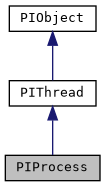
This class inherits from PIThread and provides event-based notifications for process lifecycle events.
 1.18.0