 |
PIP 5.9.0
Platform-Independent Primitives
|
Loading...
Searching...
No Matches
|
PIP 5.9.0
Platform-Independent Primitives
|
Simple text tile with per-row formatting. More...
#include <piscreentiles.h>
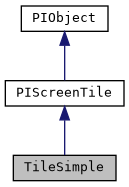
Public Types | |
| typedef PIPair< PIString, PIScreenTypes::CellFormat > | Row |
| Row text with cell format. | |
Public Member Functions | |
| TileSimple (const PIString &n=PIString()) | |
| Constructs an empty text tile. | |
| TileSimple (const Row &r) | |
| Constructs a text tile with one row. | |
| virtual | ~TileSimple () |
| Destroys the text tile. | |
| Public Member Functions inherited from PIScreenTile | |
| PIScreenTile (const PIString &n=PIString(), PIScreenTypes::Direction d=PIScreenTypes::Vertical, PIScreenTypes::SizePolicy p=PIScreenTypes::Preferred) | |
| Constructs a tile with name, child layout direction, and size policy. | |
| virtual | ~PIScreenTile () |
| Destroys the tile and its owned child tiles. | |
| void | addTile (PIScreenTile *t) |
| Adds child tile t, makes this tile its parent, and attaches the subtree to the same screen bridge. | |
| void | takeTile (PIScreenTile *t) |
| Detaches child tile t without deleting it and removes its screen association. | |
| void | removeTile (PIScreenTile *t) |
| Removes and deletes child tile t. | |
| PIScreenTile * | parentTile () const |
Returns the parent tile or nullptr for the root. | |
| PIVector< PIScreenTile * > | children (bool only_visible=false) |
| Returns all descendant tiles. Hidden tiles can be skipped with only_visible. | |
| PIScreenTile * | childUnderMouse (int x, int y) |
| Returns the first visible direct child covering screen point x, y. | |
| void | show () |
| Makes the tile visible for subsequent layout, hit-testing, and drawing passes. | |
| void | hide () |
| Hides the tile from layout, hit-testing, and drawing passes. | |
| void | setFocus () |
| Requests focus for this tile if it is attached to a screen and allows focus. | |
| bool | hasFocus () const |
| Returns whether this tile currently owns focus. | |
| void | setMargins (int m) |
| Sets all margins to m cells. | |
| void | setMargins (int l, int r, int t, int b) |
| Sets left, right, top, and bottom margins in cells. | |
| int | x () const |
| Returns the tile X coordinate in screen space. | |
| int | y () const |
| Returns the tile Y coordinate in screen space. | |
| int | width () const |
| Returns the current tile width in cells. | |
| int | height () const |
| Returns the current tile height in cells. | |
| Public Member Functions inherited from PIObject | |
| PIObject (const PIString &name=PIString()) | |
Constructs an object and initializes its name property. | |
| virtual | ~PIObject () |
| Destroys the object, raises deleted() and disconnects it from the event graph. | |
| PIString | name () const |
Returns the name property of this object. | |
| virtual const char * | className () const |
| Returns the registered class name of this object. | |
| virtual uint | classNameID () const |
| Returns the hash of className(). | |
| virtual const char * | parentClassName () const |
| Returns the registered parent class name, or an empty string for the root. | |
| bool | debug () const |
| Returns whether piCoutObj output is enabled for this object. | |
| void | setName (const PIString &name) |
Sets the name property of this object. | |
| void | setDebug (bool debug) |
| Enables or disables piCoutObj output for this object. | |
| PIVariant | property (const char *name) const |
| Returns the property with name "name". | |
| void | setProperty (const char *name, const PIVariant &value) |
| Sets the property "name" to "value" and creates it if needed. | |
| bool | isPropertyExists (const char *name) const |
| Returns whether the property "name" exists. | |
| void | setThreadSafe (bool yes) |
| Enables or disables the internal object mutex during handler execution. | |
| bool | isThreadSafe () const |
| Returns whether the internal object mutex is enabled for handler execution. | |
| bool | execute (const PIString &method, const PIVector< PIVariantSimple > &vl) |
| Executes a registered method or handler method by name with the supplied arguments. | |
| bool | execute (const PIString &method) |
| Overload of execute() for a method without arguments. | |
| bool | execute (const PIString &method, const PIVariantSimple &v0) |
| Overload of execute() for one argument. | |
| bool | execute (const PIString &method, const PIVariantSimple &v0, const PIVariantSimple &v1) |
| Overload of execute() for two arguments. | |
| bool | execute (const PIString &method, const PIVariantSimple &v0, const PIVariantSimple &v1, const PIVariantSimple &v2) |
| Overload of execute() for three arguments. | |
| bool | execute (const PIString &method, const PIVariantSimple &v0, const PIVariantSimple &v1, const PIVariantSimple &v2, const PIVariantSimple &v3) |
| Overload of execute() for four arguments. | |
| bool | executeQueued (PIObject *performer, const PIString &method, const PIVector< PIVariantSimple > &vl) |
| Queues execution of a registered method on the performer object. | |
| bool | executeQueued (PIObject *performer, const PIString &method) |
| Overload of executeQueued() for a method without arguments. | |
| bool | executeQueued (PIObject *performer, const PIString &method, const PIVariantSimple &v0) |
| Overload of executeQueued() for one argument. | |
| bool | executeQueued (PIObject *performer, const PIString &method, const PIVariantSimple &v0, const PIVariantSimple &v1) |
| Overload of executeQueued() for two arguments. | |
| bool | executeQueued (PIObject *performer, const PIString &method, const PIVariantSimple &v0, const PIVariantSimple &v1, const PIVariantSimple &v2) |
| Overload of executeQueued() for three arguments. | |
| bool | executeQueued (PIObject *performer, const PIString &method, const PIVariantSimple &v0, const PIVariantSimple &v1, const PIVariantSimple &v2, const PIVariantSimple &v3) |
| Overload of executeQueued() for four arguments. | |
| void | dump (const PIString &line_prefix=PIString()) const |
| Dumps object diagnostics to the project output stream. | |
| PIStringList | scopeList () const |
| Returns the registered inheritance scope of this object, including its own class. | |
| PIStringList | methodsEH () const |
| Returns full signatures of all registered event and handler methods for this class scope. | |
| bool | isMethodEHContains (const PIString &name) const |
| Returns whether a registered event or handler method with this name exists. | |
| PIString | methodEHArguments (const PIString &name) const |
| Returns the comma-separated argument type list of a registered method. | |
| PIString | methodEHFullFormat (const PIString &name) const |
| Returns the full registered signature of a method. | |
| PIString | methodEHFromAddr (const void *addr) const |
| Returns the registered method name for the specified entry-point address. | |
| void | piDisconnect (const PIString &sig, PIObject *dest, void *ev_h) |
| Disconnects this source object from a specific destination handler for event "sig". | |
| void | piDisconnect (const PIString &sig, PIObject *dest) |
| Disconnects this source object from all connections of event "sig" to destination object "dest". | |
| void | piDisconnect (const PIString &sig) |
| Disconnects this source object from all connections of event "sig". | |
| bool | isPIObject () const |
| Returns whether this pointer still refers to a live PIObject instance. | |
| template<typename T> | |
| bool | isTypeOf () const |
| Returns whether this object belongs to class "T" or one of its registered descendants. | |
| template<typename T> | |
| T * | cast () const |
Returns this object cast to "T" when isTypeOf<T>() succeeds, otherwise nullptr. | |
| void | callQueuedEvents () |
| Executes all queued deliveries posted to this performer object. | |
| bool | maybeCallQueuedEvents () |
| Executes queued deliveries only when this object was used as a performer. | |
| void | deleteLater () |
| Schedules the object for deferred deletion. | |
| void | deleted (PIObject *o) |
| Raised immediately before object destruction. | |
Public Attributes | |
| PIVector< Row > | content |
| Rows displayed by the tile. | |
| PIScreenTypes::Alignment | alignment |
| Horizontal text alignment inside the tile. | |
| Public Attributes inherited from PIScreenTile | |
| PIScreenTypes::Direction | direction |
| Direction used to lay out child tiles. | |
| PIScreenTypes::SizePolicy | size_policy |
| Size policy used by the parent during layout. | |
| PIScreenTypes::FocusFlags | focus_flags |
| Focus and navigation flags for the tile. | |
| PIScreenTypes::CellFormat | back_format |
| Background format used to prefill the tile area before drawing. | |
| PIChar | back_symbol |
| Background symbol used to prefill the tile area before drawing. | |
| int | minimumWidth |
| Minimum size limits accepted during layout. | |
| int | maximumWidth |
| Maximum size limits accepted during layout. | |
| int | marginLeft |
| Outer margins in cells. | |
| int | spacing |
| Spacing between visible child tiles in cells. | |
| bool | visible |
| Whether the tile participates in layout, hit-testing, and drawing. | |
Protected Member Functions | |
| void | sizeHint (int &w, int &h) const override |
| Returns the preferred tile size in w and h. The base implementation derives it from visible children, spacing, and margins. | |
| void | drawEvent (PIScreenDrawer *d) override |
| Draws the tile with drawer d in screen coordinates. | |
| Protected Member Functions inherited from PIScreenTile | |
| virtual void | resizeEvent (int w, int h) |
| Called after the tile size changes to w by h during layout. | |
| virtual bool | keyEvent (PIKbdListener::KeyEvent key) |
| Handles keyboard input and returns true when the event is consumed. | |
| virtual bool | mouseEvent (PIKbdListener::MouseEvent me) |
| Handles mouse input and returns true when the event is consumed. | |
| virtual bool | wheelEvent (PIKbdListener::WheelEvent we) |
| Handles mouse wheel input and returns true when the event is consumed. | |
| void | raiseEvent (PIScreenTypes::TileEvent e) |
| Raises tile event. | |
| void | setScreen (PIScreenTypes::PIScreenBase *s) |
| Sets screen reference. | |
| void | deleteChildren () |
| Deletes all owned child tiles. | |
| void | drawEventInternal (PIScreenDrawer *d) |
| Draws background, tile contents, and then child tiles. | |
| void | layout () |
| Recomputes child geometry according to size hints, margins, and policies. | |
| bool | needLayout () |
| Returns whether this tile should participate in automatic layout. Tiles with policy PIScreenTypes::Ignore are skipped. | |
| Protected Member Functions inherited from PIObject | |
| PIObject * | emitter () const |
| Returns the source object that raised the current event. | |
| virtual void | propertyChanged (const char *name) |
| Virtual method called after property "name" has been changed by setProperty(). | |
Additional Inherited Members | |
| Static Public Member Functions inherited from PIObject | |
| static bool | execute (PIObject *o, const PIString &method, const PIVector< PIVariantSimple > &vl) |
| Static convenience wrapper for execute(). | |
| static bool | execute (PIObject *o, const PIString &method) |
| Static overload of execute() without arguments. | |
| static bool | execute (PIObject *o, const PIString &method, const PIVariantSimple &v0) |
| Static overload of execute() for one argument. | |
| static bool | execute (PIObject *o, const PIString &method, const PIVariantSimple &v0, const PIVariantSimple &v1) |
| Static overload of execute() for two arguments. | |
| static bool | execute (PIObject *o, const PIString &method, const PIVariantSimple &v0, const PIVariantSimple &v1, const PIVariantSimple &v2) |
| Static overload of execute() for three arguments. | |
| static bool | execute (PIObject *o, const PIString &method, const PIVariantSimple &v0, const PIVariantSimple &v1, const PIVariantSimple &v2, const PIVariantSimple &v3) |
| Static overload of execute() for four arguments. | |
| static bool | executeQueued (PIObject *o, PIObject *performer, const PIString &method, const PIVector< PIVariantSimple > &vl) |
| Static convenience wrapper for executeQueued(). | |
| static bool | executeQueued (PIObject *o, PIObject *performer, const PIString &method) |
| Static overload of executeQueued() without arguments. | |
| static bool | executeQueued (PIObject *o, PIObject *performer, const PIString &method, const PIVariantSimple &v0) |
| Static overload of executeQueued() for one argument. | |
| static bool | executeQueued (PIObject *o, PIObject *performer, const PIString &method, const PIVariantSimple &v0, const PIVariantSimple &v1) |
| Static overload of executeQueued() for two arguments. | |
| static bool | executeQueued (PIObject *o, PIObject *performer, const PIString &method, const PIVariantSimple &v0, const PIVariantSimple &v1, const PIVariantSimple &v2) |
| Static overload of executeQueued() for three arguments. | |
| static bool | executeQueued (PIObject *o, PIObject *performer, const PIString &method, const PIVariantSimple &v0, const PIVariantSimple &v1, const PIVariantSimple &v2, const PIVariantSimple &v3) |
| Static overload of executeQueued() for four arguments. | |
| static PIObject::Connection | piConnect (PIObject *src, const PIString &sig, PIObject *dest_o, void *dest, void *ev_h, void *e_h, int args, const char *loc) |
Low-level direct connection helper behind the legacy CONNECT* macros. | |
| static PIObject::Connection | piConnectU (PIObject *src, const PIString &sig, PIObject *dest_o, void *dest, const PIString &hname, const char *loc, PIObject *performer=0) |
| Low-level name-based connection helper behind CONNECTU() and CONNECTU_QUEUED(). | |
| static PIObject::Connection | piConnectLS (PIObject *src, const PIString &sig, std::function< void()> *f, const char *loc) |
| Low-level helper that connects an event to a lambda or functor wrapper. | |
| static void | piDisconnect (PIObject *src, const PIString &sig, PIObject *dest, void *ev_h) |
| Disconnects source object "src" from a specific destination handler for event "sig". | |
| static void | piDisconnect (PIObject *src, const PIString &sig, PIObject *dest) |
| Disconnects source object "src" from all connections of event "sig" to destination object "dest". | |
| static void | piDisconnect (PIObject *src, const PIString &sig) |
| Disconnects source object "src" from all connections of event "sig". | |
| static void | raiseEvent (PIObject *sender, const uint eventID) |
| Internal event delivery helper for registered events without arguments. | |
| template<typename T0> | |
| static void | raiseEvent (PIObject *sender, const uint eventID, const T0 &v0=T0()) |
| Internal event delivery helper for registered events with one argument. | |
| template<typename T0, typename T1> | |
| static void | raiseEvent (PIObject *sender, const uint eventID, const T0 &v0=T0(), const T1 &v1=T1()) |
| Internal event delivery helper for registered events with two arguments. | |
| template<typename T0, typename T1, typename T2> | |
| static void | raiseEvent (PIObject *sender, const uint eventID, const T0 &v0=T0(), const T1 &v1=T1(), const T2 &v2=T2()) |
| Internal event delivery helper for registered events with three arguments. | |
| template<typename T0, typename T1, typename T2, typename T3> | |
| static void | raiseEvent (PIObject *sender, const uint eventID, const T0 &v0=T0(), const T1 &v1=T1(), const T2 &v2=T2(), const T3 &v3=T3()) |
| Internal event delivery helper for registered events with four arguments. | |
| static PIObject * | findByName (const PIString &name) |
Returns the first live object with name "name", or nullptr. | |
| static bool | isPIObject (const PIObject *o) |
| Returns whether "o" points to a live PIObject instance. | |
| static bool | isPIObject (const void *o) |
| Overload of isPIObject() for an untyped pointer. | |
| template<typename T> | |
| static bool | isTypeOf (const PIObject *o) |
| Returns whether "o" belongs to class "T" or one of its registered descendants. | |
| template<typename T> | |
| static bool | isTypeOf (const void *o) |
| Overload of isTypeOf() for an untyped pointer. | |
| static PIString | simplifyType (const char *a, bool readable=true) |
| Simplifies a C++ type spelling for registered-method metadata. | |
| Protected Attributes inherited from PIScreenTile | |
| PIVector< PIScreenTile * > | tiles |
| Owned direct child tiles. | |
| PIScreenTile * | parent |
Parent tile or nullptr for the root or detached tiles. | |
| PIScreenTypes::PIScreenBase * | screen |
| Screen pointer, receiving tile notifications. | |
| int | x_ |
| Tile position and size in screen cells. | |
| bool | has_focus |
| Whether this tile currently owns focus. | |
| Related Symbols inherited from PIObject | |
| #define | piCoutObj |
| Macro used for conditional (piDebug && PIObject::debug()) output to PICout(StdOut) for subclasses of PIObject. | |
| #define | piCerrObj |
| Macro used for conditional (piDebug && PIObject::debug()) output to PICout(StdErr) for subclasses of PIObject. | |
| #define | PIOBJECT(name) |
| Put this macro inside a direct PIObject subclass definition to enable registered events, event handlers and class metadata. | |
| #define | PIOBJECT_SUBCLASS(name, parent) |
| Put this macro inside a PIObject subclass definition to inherit registered methods and class scope from "parent". | |
| #define | EVENT_HANDLER0(ret, name) |
| Declare a registered event handler method with signature ret name(). | |
| #define | EVENT_HANDLER1(ret, name, type0, var0) |
| Declare a registered event handler method with one argument. | |
| #define | EVENT_HANDLER2(ret, name, type0, var0, type1, var1) |
| Declare a registered event handler method with two arguments. | |
| #define | EVENT_HANDLER3(ret, name, type0, var0, type1, var1, type2, var2) |
| Declare a registered event handler method with three arguments. | |
| #define | EVENT_HANDLER4(ret, name, type0, var0, type1, var1, type2, var2, type3, var3) |
| Declare a registered event handler method with four arguments. | |
| #define | EVENT_HANDLER EVENT_HANDLER0 |
| Synonym of EVENT_HANDLER0. | |
| #define | EVENT_VHANDLER0(ret, name) |
| Declare a virtual registered event handler method with signature virtual ret name(). | |
| #define | EVENT_VHANDLER1(ret, name, type0, var0) |
| Declare a virtual registered event handler method with one argument. | |
| #define | EVENT_VHANDLER2(ret, name, type0, var0, type1, var1) |
| Declare a virtual registered event handler method with two arguments. | |
| #define | EVENT_VHANDLER3(ret, name, type0, var0, type1, var1, type2, var2) |
| Declare a virtual registered event handler method with three arguments. | |
| #define | EVENT_VHANDLER4(ret, name, type0, var0, type1, var1, type2, var2, type3, var3) |
| Declare a virtual registered event handler method with four arguments. | |
| #define | EVENT_VHANDLER EVENT_VHANDLER0 |
| Synonym of EVENT_VHANDLER0. | |
| #define | EVENT0(name) |
| Declare an event method with no arguments. | |
| #define | EVENT1(name, type0, var0) |
| Declare an event method with one argument. | |
| #define | EVENT2(name, type0, var0, type1, var1) |
| Declare an event method with two arguments. | |
| #define | EVENT3(name, type0, var0, type1, var1, type2, var2) |
| Declare an event method with three arguments. | |
| #define | EVENT4(name, type0, var0, type1, var1, type2, var2, type3, var3) |
| Declare an event method with four arguments. | |
| #define | EVENT EVENT0 |
| Synonym of EVENT0. | |
| #define | RAISE_EVENT0(src, event) |
| Compatibility helper that raises event "event" on source object "src". | |
| #define | RAISE_EVENT1(src, event, v0) |
| Compatibility helper that raises event "event" with one argument. | |
| #define | RAISE_EVENT2(src, event, v0, v1) |
| Compatibility helper that raises event "event" with two arguments. | |
| #define | RAISE_EVENT3(src, event, v0, v1, v2) |
| Compatibility helper that raises event "event" with three arguments. | |
| #define | RAISE_EVENT4(src, event, v0, v1, v2, v3) |
| Compatibility helper that raises event "event" with four arguments. | |
| #define | CONNECTU(src, event, dest, handler) |
| Connect event "event" from object "src" to event handler or event "handler" of object "dest". | |
| #define | CONNECTU_QUEUED(src, event, dest, handler, performer) |
| Connect event "event" from object "src" to event handler or event "handler" of object "dest". | |
| #define | CONNECTL(src, event, functor) |
| Connect event "event" from object "src" to lambda-expression "functor". | |
| #define | CONNECT0(ret, src, event, dest, handler) |
| Legacy compatibility helper that connects an event to a registered handler with compile-time signature spelling. | |
| #define | CONNECT1(ret, type0, src, event, dest, handler) |
| Legacy compatibility helper for a one-argument registered event or handler. | |
| #define | CONNECT2(ret, type0, type1, src, event, dest, handler) |
| Legacy compatibility helper for a two-argument registered event or handler. | |
| #define | CONNECT3(ret, type0, type1, type2, src, event, dest, handler) |
| Legacy compatibility helper for a three-argument registered event or handler. | |
| #define | CONNECT4(ret, type0, type1, type2, type3, src, event, dest, handler) |
| Legacy compatibility helper for a four-argument registered event or handler. | |
| #define | CONNECT CONNECT0 |
| Synonym of CONNECT0. | |
| #define | WEAK_CONNECT0(ret, src, event, dest, handler) |
| Legacy compatibility helper that skips source method verification. | |
| #define | WEAK_CONNECT1(ret, type0, src, event, dest, handler) |
| Legacy compatibility helper that skips source method verification for one argument. | |
| #define | WEAK_CONNECT2(ret, type0, type1, src, event, dest, handler) |
| Legacy compatibility helper that skips source method verification for two arguments. | |
| #define | WEAK_CONNECT3(ret, type0, type1, type2, src, event, dest, handler) |
| Legacy compatibility helper that skips source method verification for three arguments. | |
| #define | WEAK_CONNECT4(ret, type0, type1, type2, type3, src, event, dest, handler) |
| Legacy compatibility helper that skips source method verification for four arguments. | |
| #define | WEAK_CONNECT WEAK_CONNECT0 |
| Synonym of WEAK_CONNECT0. | |
| #define | DISCONNECT0(ret, src, event, dest, handler) |
| Disconnect a registered event from a registered event handler. | |
| #define | DISCONNECT1(ret, type0, src, event, dest, handler) |
| Disconnect a one-argument registered event from a registered event handler. | |
| #define | DISCONNECT2(ret, type0, type1, src, event, dest, handler) |
| Disconnect a two-argument registered event from a registered event handler. | |
| #define | DISCONNECT3(ret, type0, type1, type2, src, event, dest, handler) |
| Disconnect a three-argument registered event from a registered event handler. | |
| #define | DISCONNECT4(ret, type0, type1, type2, type3, src, event, dest, handler) |
| Disconnect a four-argument registered event from a registered event handler. | |
| #define | DISCONNECT DISCONNECT0 |
| Synonym of DISCONNECT0. | |
| #define | HANDLER(handler) |
| Low-level helper that expands to the registered handler entry point. | |
Simple text tile with per-row formatting.
 1.18.0